The character, from the first minute: creation, clothing and the barber — one appearance engine, one interface, three cores.
Three resources built together, tested together, and sold together or apart. A player logs in to a room instead of a form, builds a character on their own body, arrives in a town they chose, dresses at a tailor that stands where the game’s own tailor stands, and sits in a barber’s chair that is a real chair.
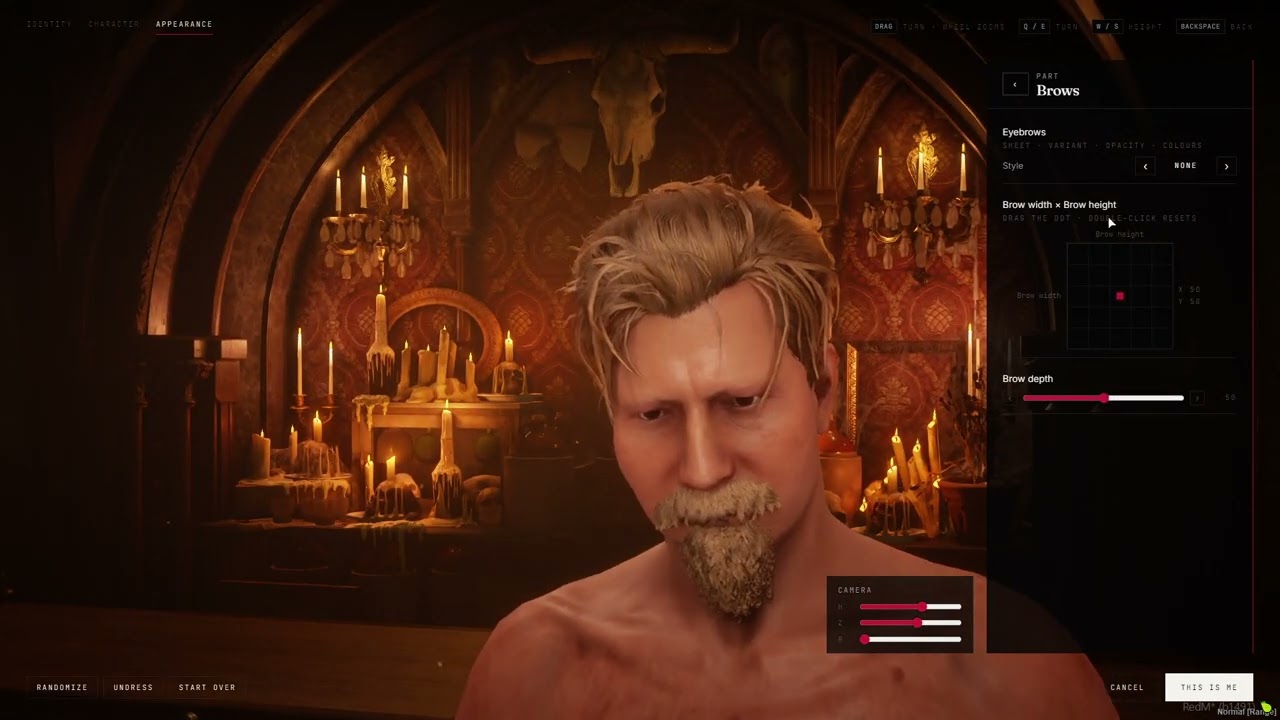
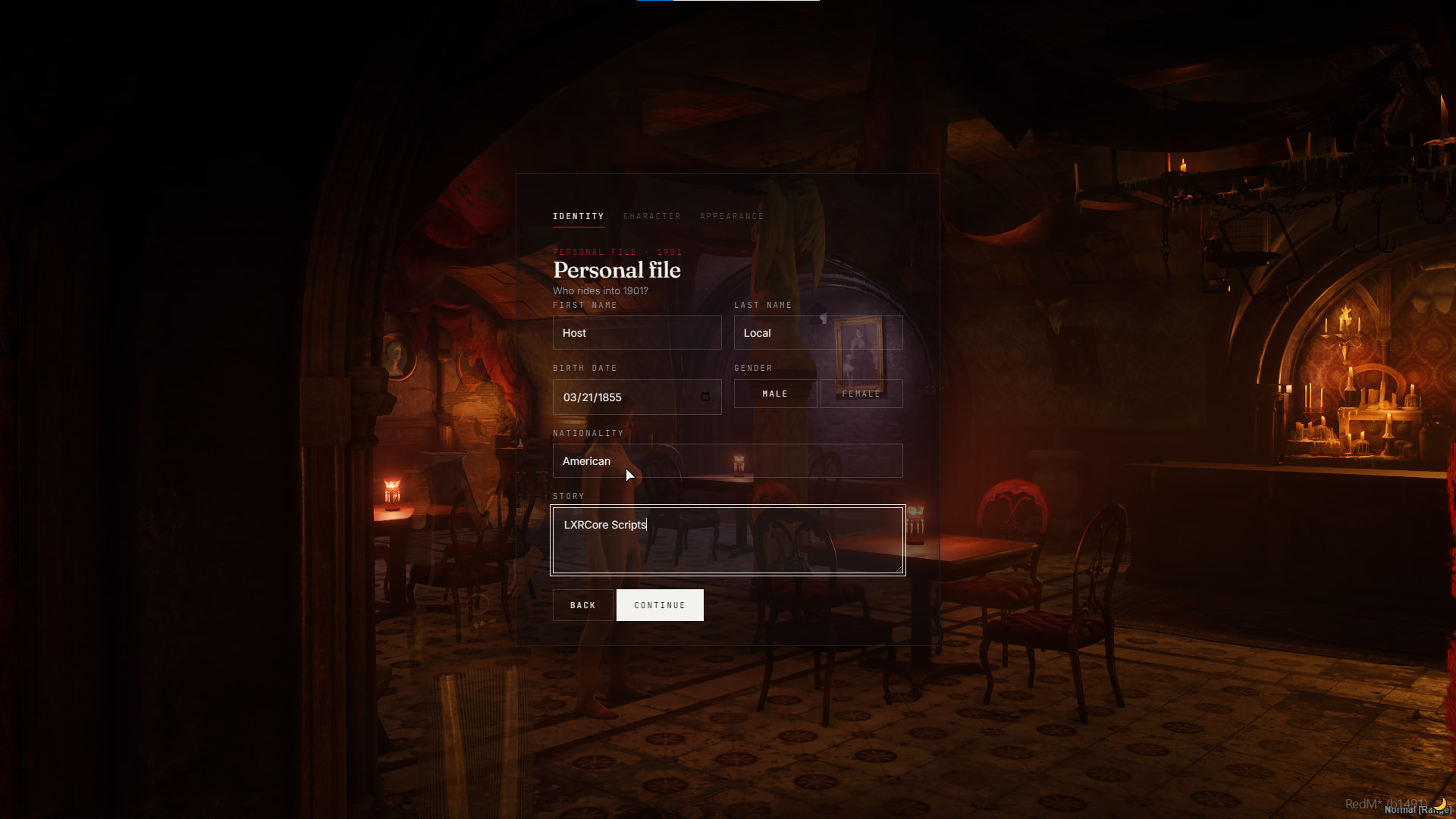
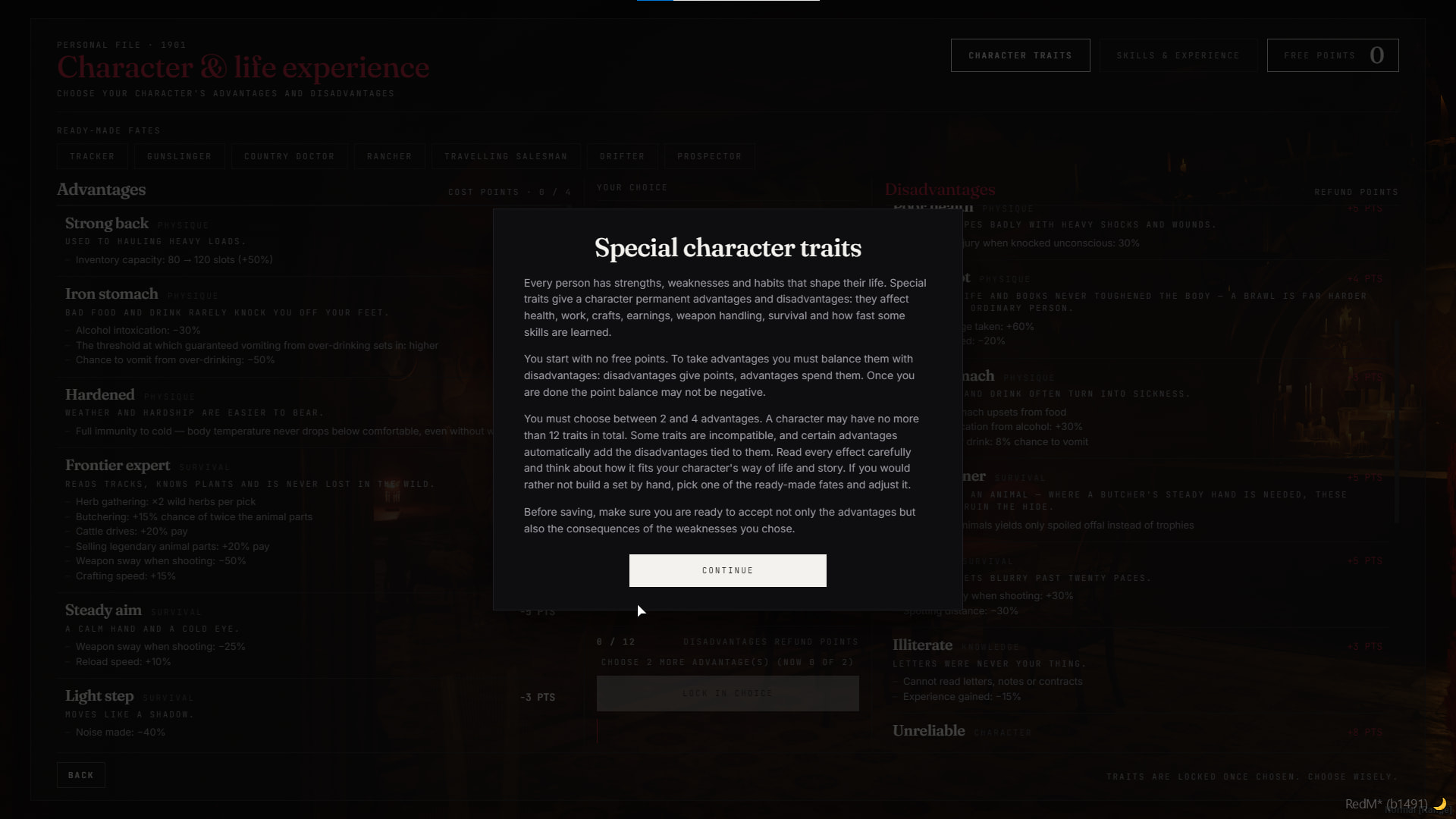


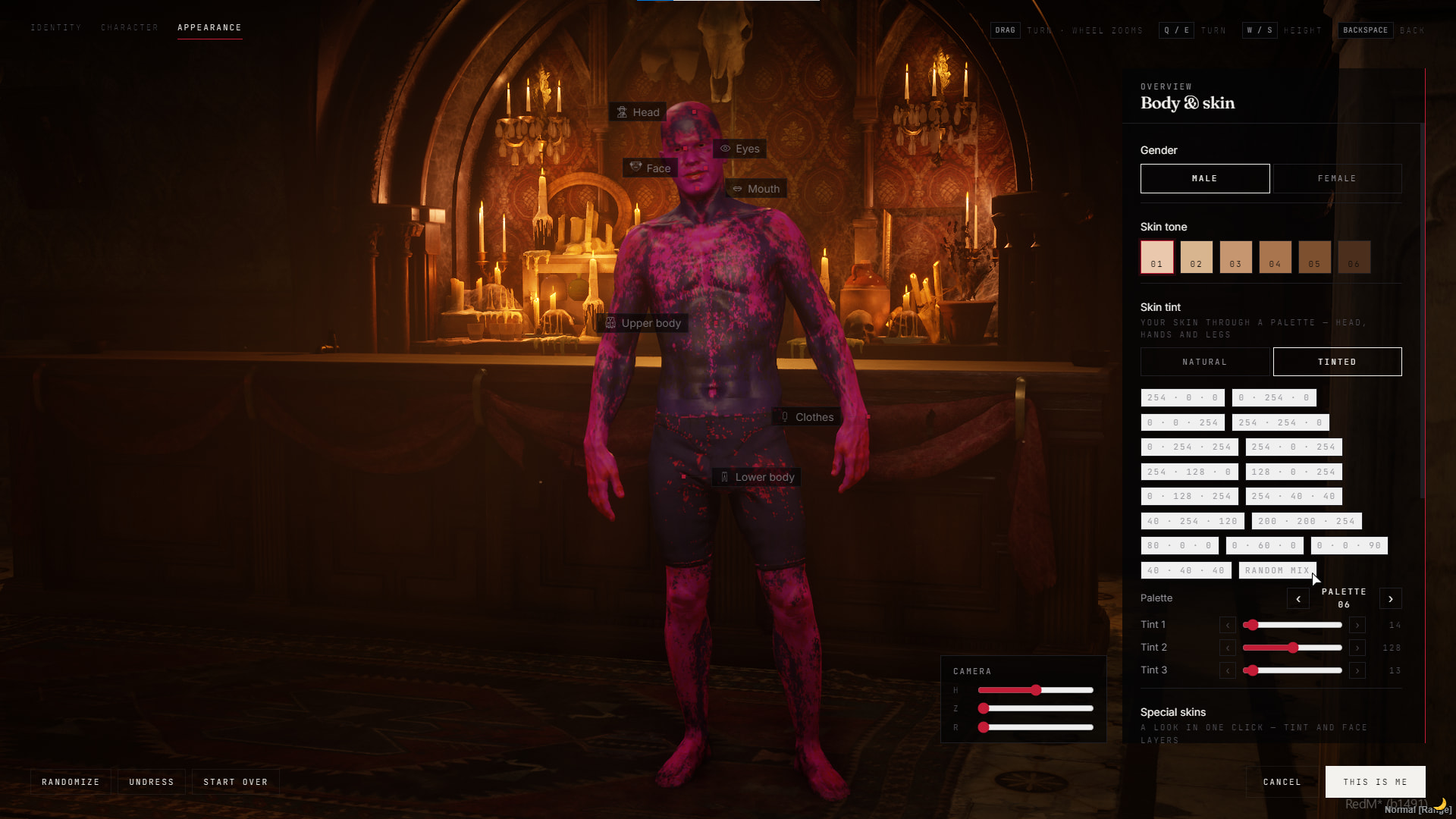
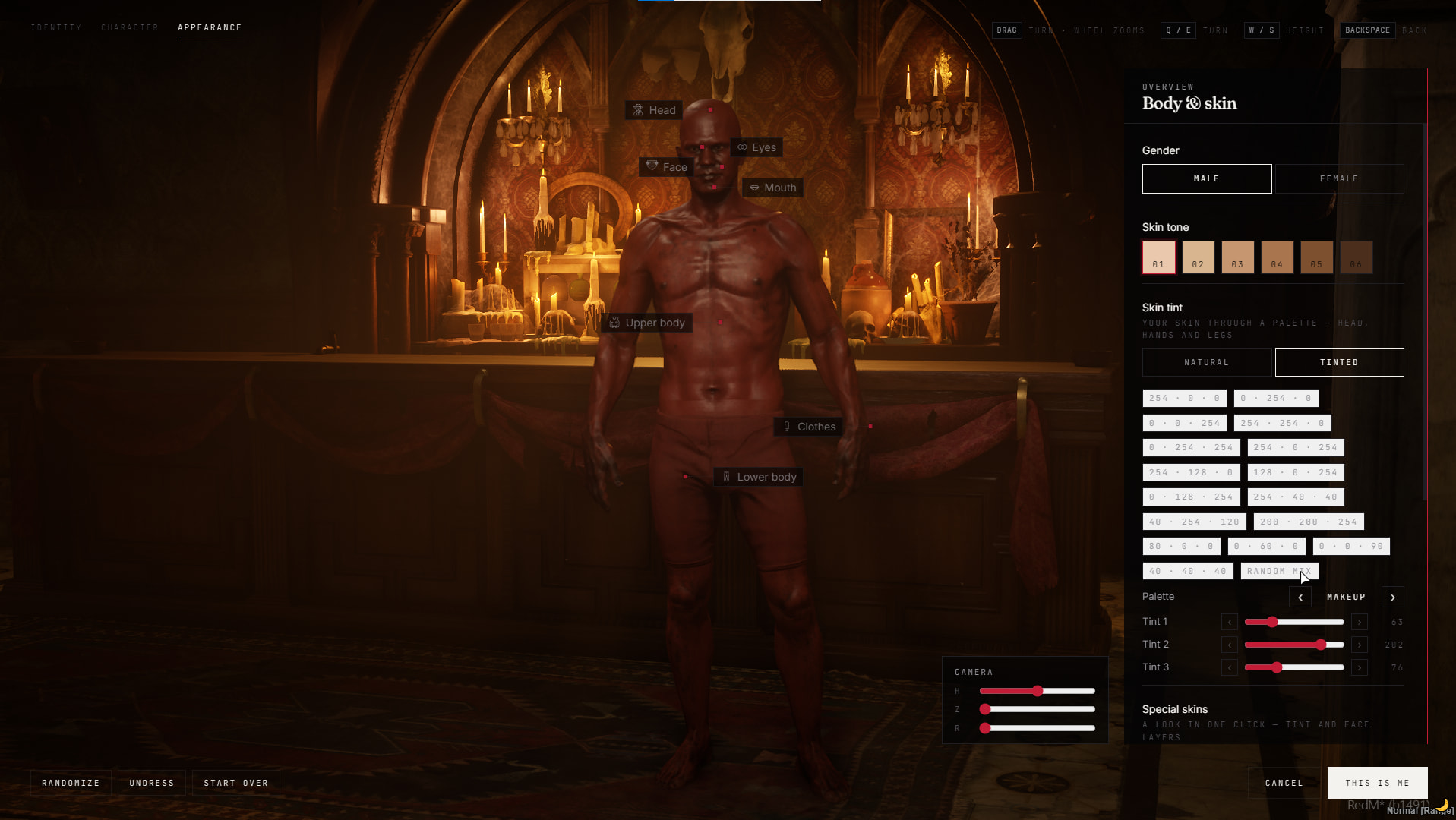


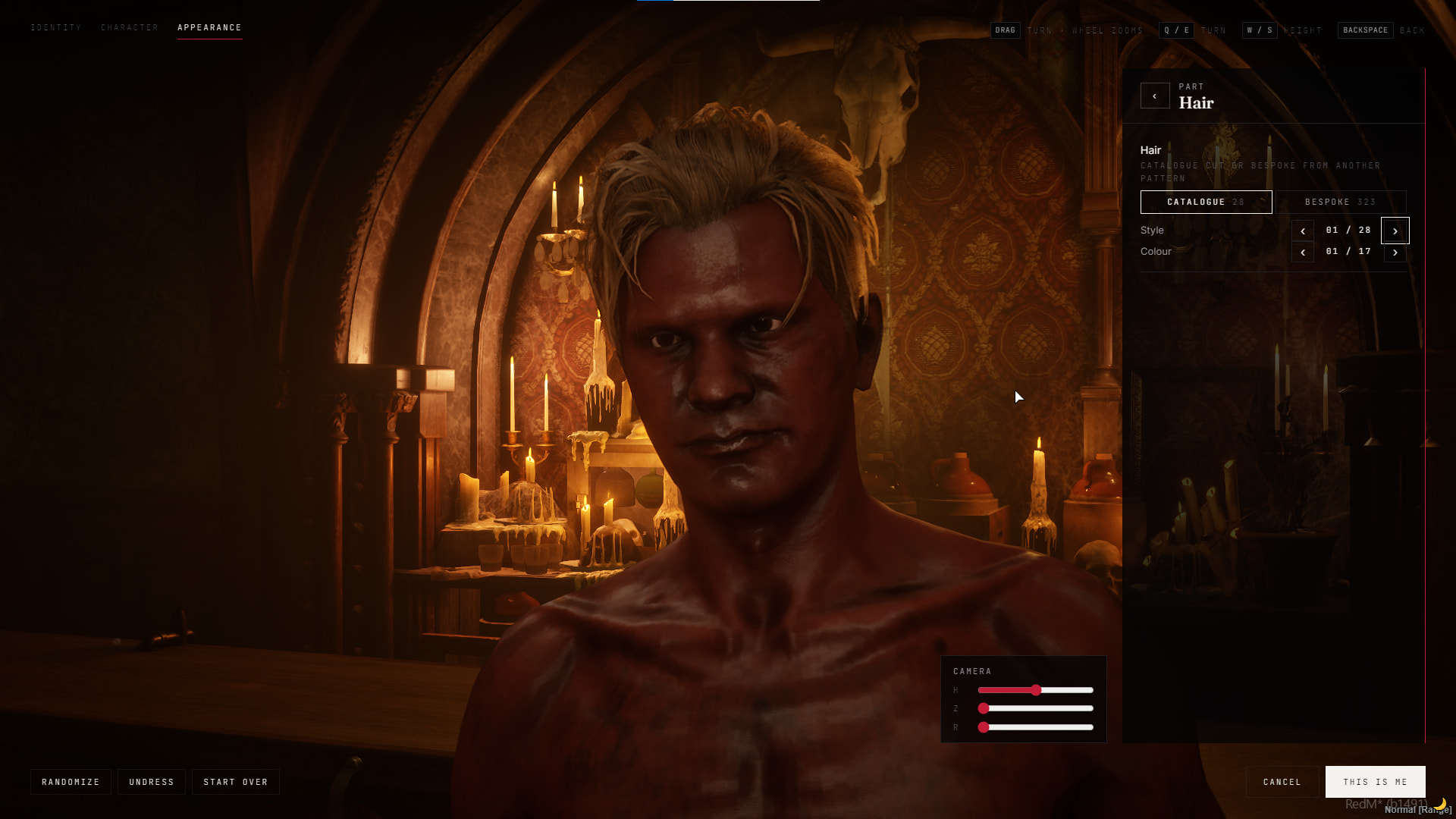


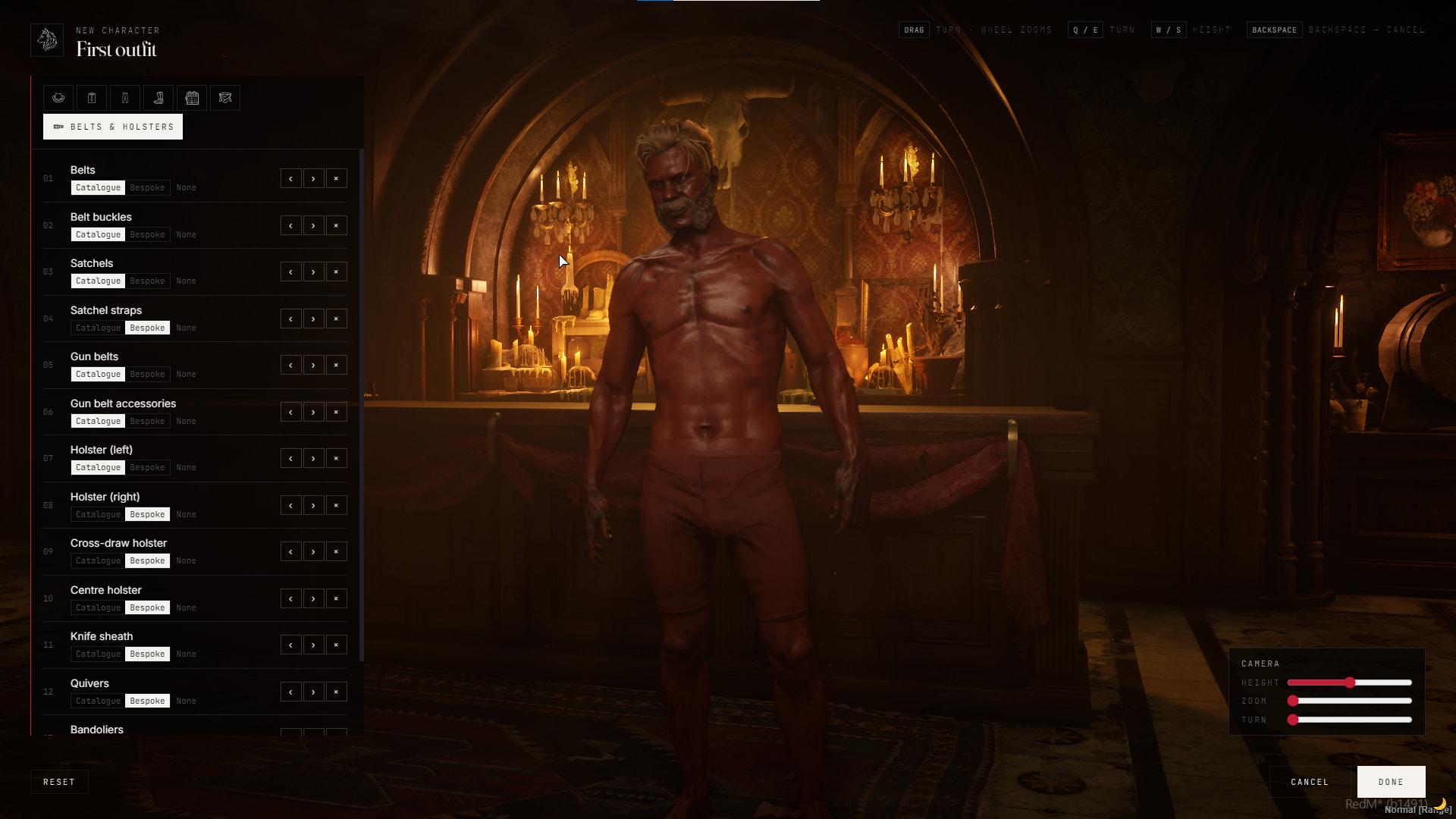
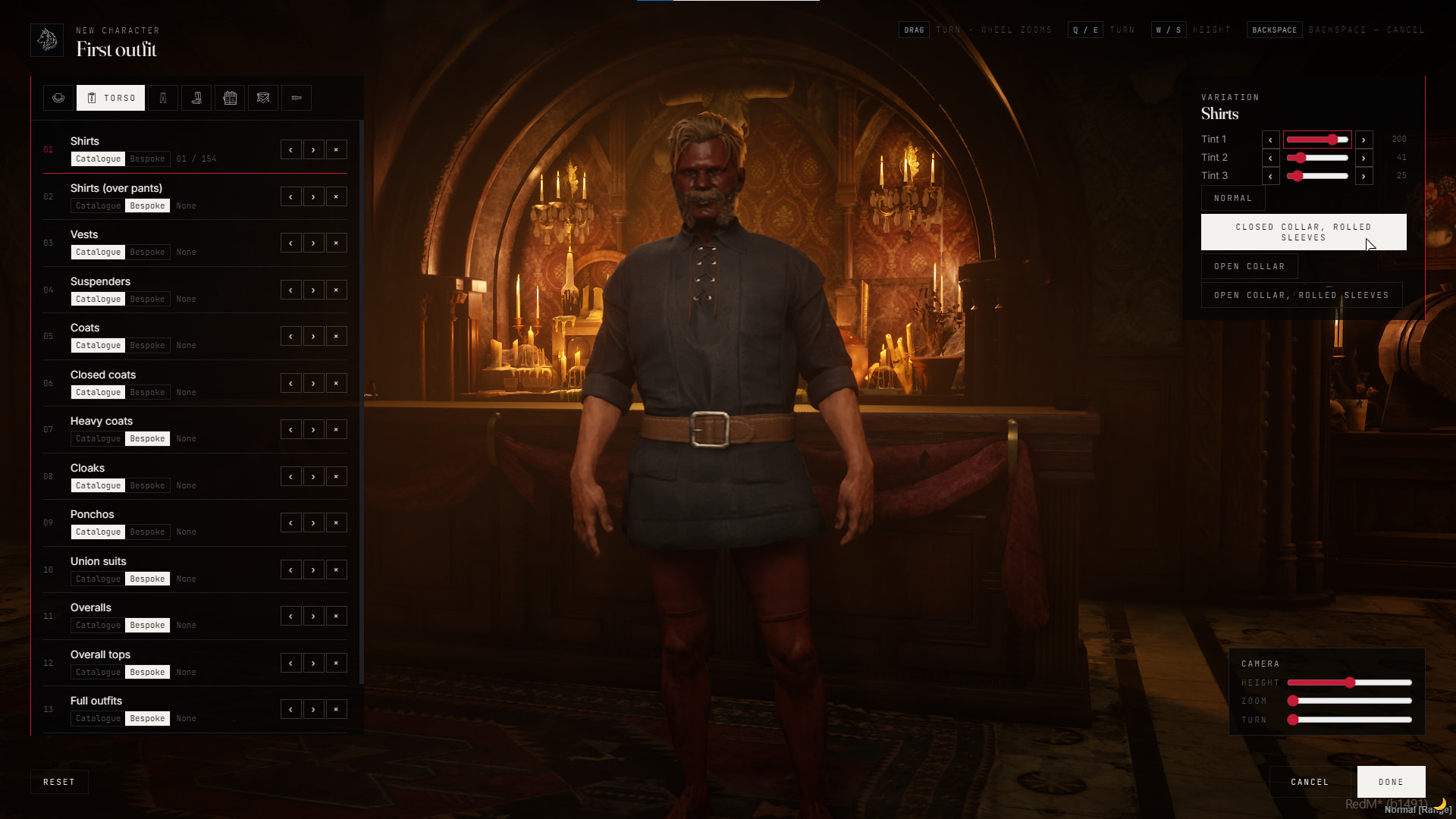
LXR Creator — the room, the file, traits, the pin creator, the spawn page
The room. Your characters sit at the tables of a staged interior — name over the head, job under it, a spare chair for a new life. Click a name or a card and the personal file opens: occupation, cash, bank, born, nationality, last seen, the story they wrote, their traits. Ride Out, or Delete with a confirmation (and the delete is on your webhook with who and which).
Creation. A personal file — name, birth date, nationality, gender, a few lines of story — then traits: advantages cost points, disadvantages earn them, the balance has to close, and the server keeps the ledger (ready-made fates for the impatient). Then the look.
The pin creator. Labels pinned to the body’s own bones — head, eyes, face, mouth, upper body, lower body, clothes — follow the character as the camera moves. Under each pin: a two-axis pad (head shape, brow, nose…), steppers you can type a number into, skin tone verified against the game’s own textures, tint palettes, face overlays, catalogue and bespoke hair, and two body sets — torso build, legs build with waist. Every hair and body the game ships, including the bespoke ones it kept for its own characters. Randomize, undress, start over.
Where the story starts. A town: its name, a few lines of its history, what is in it, a slow cinematic look at the place. The character arrives by train at the station — or the stage post, or the dock, where the rails never came. From then on every login puts them back where they left off.
Second sitting. /skin (admin) or the lxr_coin item opens the creator again for an existing character. /fixme puts a half-loaded ped right.
LXR Clothing — the appearance engine, the tailors, wardrobes, outfits as items
Everything the game has. Each rack has two pools: the catalogue the game sells, and the bespoke pieces it only gave its own people — 9,300 bespoke drawables in 17,000 variants on top of the full catalogue. Colour variants, three tint channels, worn states (sleeves, collar, tucked, raised, over / under, holster side). Click the counter and type the number.
The tailors. At the game’s own doors — Valentine, Rhodes, Blackwater, Saint Denis, Strawberry, Tumbleweed — with the game’s own prompt. What goes on the counter is priced in 1899 money and worn before paying; cancel and it comes off. Cash or gold. Prices, multipliers and job locks per door in the config.
Outfits and items. Ten named outfits per character: wear, edit at the racks, rename, delete — or pack it: the outfit becomes an item in the satchel (outfit_bundle) you can hand to another player. Single pieces can be bought as items (lxr_garment) and worn from the inventory. Both items register themselves on the core with their pictures.
Wardrobes, lockers, commands. Hotel rooms and homes have wardrobes (same page, no prices). Jobs have lockers with /uniform outfits by grade. Undress and dress by command (/hat, /coat, /pant, /undress…), by the clothing wheel, or from the inventory — the script owns the commands on every core, so no framework clothing script has to run beside it. Warmth per garment for your weather script (Warmth export).
The engine. One record per character, the validator, the apply layer, and a migration from rsg-appearance / vorp_character (/lxr-clothing:migrate). LXR Creator and LXR Barber use it when it is present.
LXR Barber — seven towns, seven chairs, and the chair is real
The customer walks to the barber’s chair and sits in it — the game’s own seat, found by the script, no coordinates to place. The hat comes off; the camera settles on the face; drag turns them, W/S raise, the wheel zooms.
Every cut the game ships, catalogue and bespoke (142 bespoke patterns for women alone), beards in their parts — full, chin, chops, moustache — three tint channels on each, bonnets, and makeup as layers with their own opacity. The bill on the counter: pay, or leave as you came in.
shaving_kit and vanity_case in the satchel: use one anywhere for the parts that kit can reach, and it wears down with use. A chair can be bought — the owner takes a cut of every bill into the till, withdraws at the chair, sells it back.
One engine, one interface
Whichever of the three runs hosts the appearance engine; the others use it, so a character has one record everywhere. The LXR UI Kit draws every page: inks and one blood accent, no rounded corners, index rows, the game’s own click sounds. Drag turns the character, the wheel zooms, W/S raise and lower. Click any number and type it. English and Georgian in all three — every string in locales/, every tunable in config.lua.
The UI kit (lxr-nui) and the clothing / action wheel (lxr-clothingradial) are free and come with every purchase.
Install is the install
Add the assets, ensure them, start the server. The scripts register their own items on the core, create their own tables, stop the stock screens they replace — rsg-multicharacter, rsg-spawn, rsg-appearance, rsg-wardrobe, rsg-barbers, vorp_character, vorp_clothingstores, vorp_barbershop — and put their item pictures where that core’s inventory reads them. No SQL to paste, no items to add by hand, nothing to edit in server.cfg beyond the ensure lines.
Performance
0.00 ms idle in all three. Nothing runs per frame outside an open screen; door prompts are the game’s own.
Editions and price
Every package is delivered as a Cfx.re asset to your Keymaster account — there is no zip to download and re-upload.
| Escrowed | Open source | |
|---|---|---|
| LXR Creator | $75 | $549 |
| LXR Clothing | $55 | $449 |
| LXR Barber | $45 | $299 |
| LXR Character+ (3 in 1) | $155 | $699 |
Escrowed: client and server are protected; config.lua, locales/, the docs, shared/, bridge/, the engine’s data tables and every page stay open and editable. Open source: the complete source, nothing encrypted — delivered through the same Cfx asset system.
Store: https://theluxempire.tebex.io — category LXR Character+
Store: https://lxrcore.com — category REDM
Requirements
- oxmysql
- One of LXRCore v3 / RSG Core / VORP Core — or standalone
- No ox_lib, no external menu or notification resource
Release information
| Code is accessible | Escrowed: No — config.lua, locales, docs, shared/, bridge/, engine data tables and the pages are open · Open source edition: Yes |
|---|---|
| Subscription-based | No |
| Lines (approximately) | 17,500 Lua + the pages |
| Requirements | oxmysql; one of lxr-core / rsg-core / vorp_core (or standalone) |
| Support | Yes — Discord tickets |
Website: https://www.lxrcore.com · Discord: LXRCore · Server: https://wolves.land
Made by iBoss21 / The Lux Empire.
